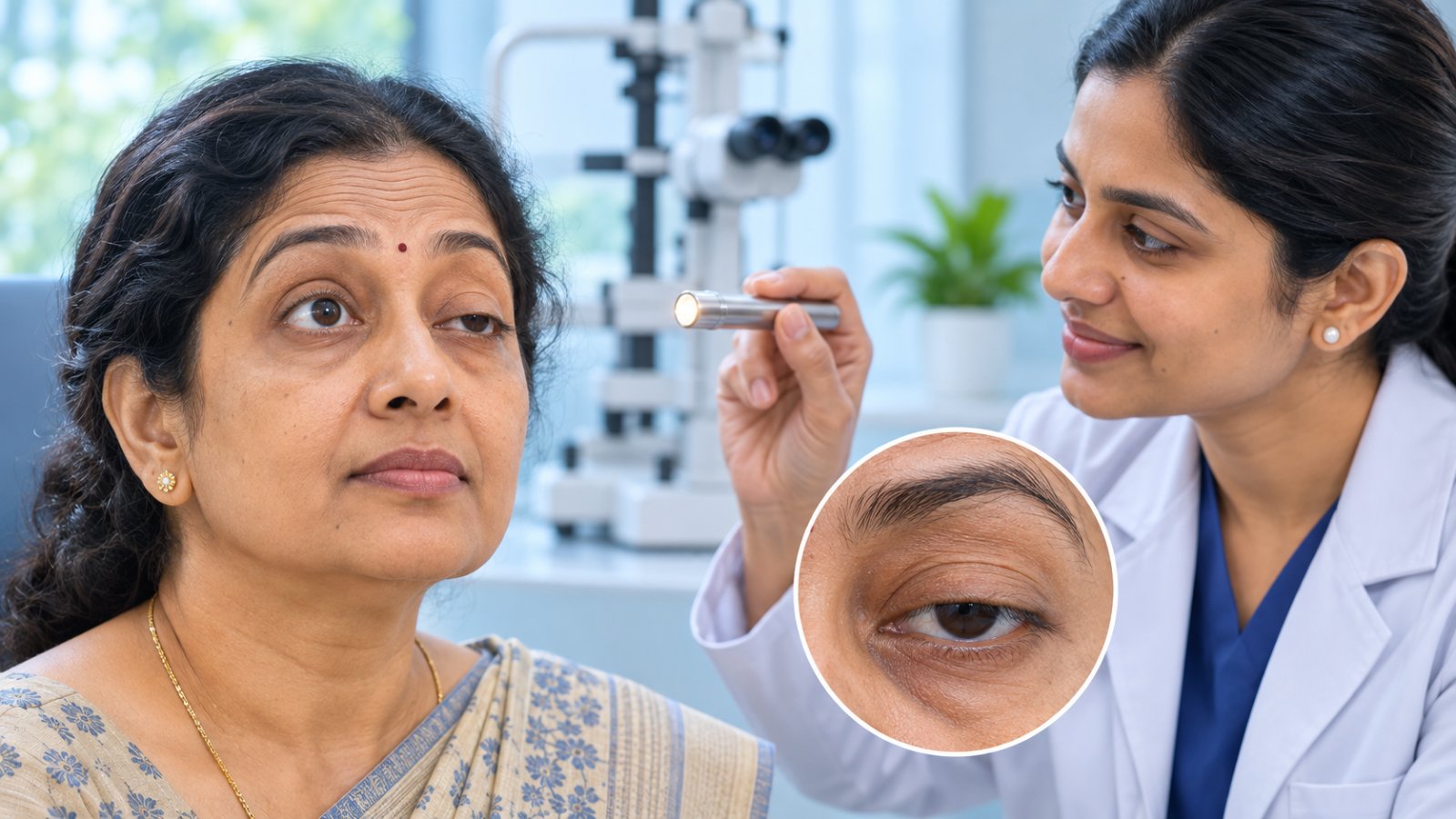
Drooping eyelids, also called ptosis, happen when the upper eyelid sags lower than normal. Sometimes, this can make your eyes look tired or uneven. However, in some cases, drooping eyelids can also cause vision problems. Because of this, it is important to know when ptosis might affect your eyesight. Understanding the signs and causes can help you protect your eye health and seek care when needed.
What Are Drooping Eyelids (Ptosis)?
Ptosis is the medical term for drooping eyelids. In this condition, the upper eyelid falls lower than it should. Sometimes, only one eyelid is affected. Other times, both eyelids may droop. While mild ptosis may not cause trouble, severe cases can block part of your vision. For some people, ptosis is present from birth. For others, it develops later in life. According to the American Academy of Ophthalmology, ptosis can affect people of all ages.
Common Symptoms of Ptosis
Ptosis can show up in many ways. Often, the signs are easy to spot. Still, it is helpful to know what to look for. For example, you may notice:
Sometimes, children with ptosis may also develop lazy eye (amblyopia). Because of this, early treatment is important for kids.
Causes of Drooping Eyelids
There are several reasons why drooping eyelids can happen. Some causes are harmless, while others may need medical care. For instance, common causes include:
Sometimes, ptosis can be a sign of a more serious health problem. Therefore, it is wise to see a doctor if you notice sudden changes.
How Ptosis Can Affect Vision
In many cases, mild drooping eyelids do not block your sight. However, when the eyelid covers part of the pupil, it can cause vision problems. For example, you may have trouble seeing objects above you. Children with ptosis may develop lazy eye if the eyelid blocks their vision. Over time, this can lead to poor vision in that eye. Adults may also feel eye strain or headaches from trying to keep their eyes open. In severe cases, ptosis can limit your field of vision and affect daily tasks like reading or driving. According to the CDC, vision problems can impact safety and quality of life.
Diagnosis of Ptosis
If you notice drooping eyelids or vision changes, it is important to see an eye doctor. Usually, the doctor will:
Sometimes, special tests or scans may be needed. For example, these tests can help find nerve or muscle problems. Early diagnosis helps prevent long-term vision issues.
Treatment Options for Drooping Eyelids
Treatment for ptosis depends on the cause and how much it affects your vision. In mild cases, you may not need treatment. However, if ptosis blocks your sight or causes other problems, your doctor may suggest:
Surgery is common for severe ptosis. According to peer-reviewed studies, eyelid surgery can improve both appearance and vision. Always discuss the risks and benefits with your eye doctor.
Lifestyle Tips and Prevention
While not all cases of drooping eyelids can be prevented, some steps may help protect your eye health. For instance, you can:
In many cities, access to eye care is improving. Because of this, early treatment for ptosis and other eye problems is now easier. Keeping your eyes healthy can help you enjoy clear vision for years to come.